Can Text Messages Be Used as Evidence in Court?
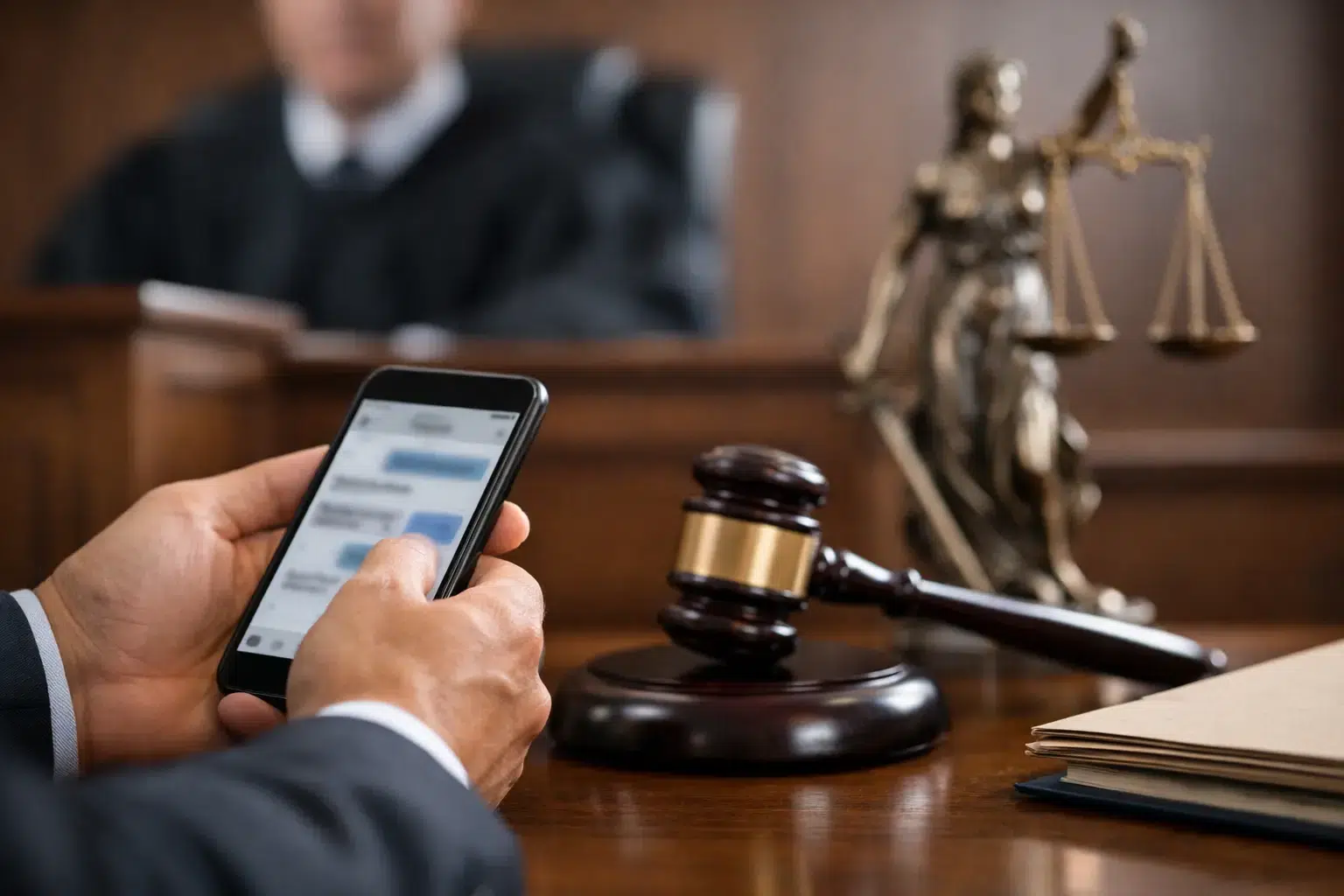
A single screenshot can change the tone of an investigation. A message that seemed private can be shown to police, prosecutors, a judge, or a jury. So, can text messages be used as evidence in court? Yes, they can. But the fact that a message exists does not automatically make it reliable, admissible, or enough to prove what the prosecution claims.
In a South Carolina criminal case, text-message evidence must be examined carefully. Who actually sent it? Was the conversation complete? Was the phone searched lawfully? Does the message mean what the State says it means? Those questions can matter in cases involving domestic violence allegations, drug charges, threats, theft, weapons offenses, DUI investigations, and more.
Can Text Messages Be Used as Evidence in South Carolina?
Text messages may be used by either side in a criminal case. The prosecution may offer texts to argue that a defendant made a threat, arranged a drug transaction, admitted conduct, knew about an item, or intended to commit a crime. The defense may use the same conversation to show context, expose an accusation as misleading, establish a timeline, or demonstrate that a statement was misunderstood.
A text is not automatically admitted just because someone takes a screenshot. Before the court allows the jury to consider it, the party offering the evidence generally must establish a proper foundation. That process is often called authentication. In plain English, the court needs enough evidence to find that the message is what its proponent says it is.
That can be done in different ways. The alleged sender may admit writing the message. A witness may recognize the phone number, account, writing style, or details only the sender would know. Investigators may recover messages directly from a device or through a forensic extraction. The surrounding facts may also point to the sender.
Authentication is not a rubber stamp. A name at the top of a text thread does not prove who had the phone at the time. Phones are shared, borrowed, lost, accessed by others, and sometimes used without permission. A careful defense looks beyond the contact label and asks whether the evidence truly ties the message to the accused person.
A Screenshot Is Not the Whole Conversation
Screenshots are common because they are easy to save and share. They are also incomplete by nature. They may leave out earlier messages, later messages, timestamps, contact information, reactions, attachments, or the wider conversation that gives a statement its meaning.
Consider a message that reads, “I will take care of this tonight.” Standing alone, the State may argue it sounds threatening or incriminating. The messages before and after it may show the person was talking about picking up a child, paying a bill, returning property, or dealing with a work issue. Context does not always eliminate risk, but it can change how a message should be understood.
The defense should also examine whether screenshots were altered, cropped, forwarded, or recreated. Modern phones make editing images simple. That does not mean every screenshot is false. It means the prosecution should be required to establish where it came from and whether it fairly represents the original communication.
When possible, the original device, a complete device extraction, carrier records, or other corroborating evidence can provide a clearer picture. Even then, the details matter. A forensic report may show that data existed on a device, but it may not answer every question about who typed it or what the participants meant.
The State Must Still Prove Its Case
A text message may be powerful evidence, but it does not relieve the prosecution of its burden. In a criminal case, the State must prove each required element beyond a reasonable doubt. A troubling message can be relevant without proving the charge.
For example, a text that says, “I’m sorry,” may be presented as an admission after an alleged assault. But apologies can be expressions of regret, attempts to calm a conflict, or responses to pressure from another person. A message about meeting someone may be consistent with a drug transaction, but it may also have an innocent explanation depending on the surrounding facts.
Words on a screen do not interpret themselves. The timing of the message, the relationship between the people involved, the full thread, witness statements, location data, call records, and physical evidence can all affect its value. A strong defense does not assume that one piece of digital evidence decides the case.
Can Text Messages Be Excluded From Court?
Sometimes, yes. Whether a text can be excluded depends on how it was obtained, whether it can be authenticated, what it is being offered to prove, and whether legal rules limit its use.
A major issue can be the search of a phone. Cell phones hold an extraordinary amount of personal information, including private conversations, photos, financial information, location history, and access to online accounts. Law enforcement often needs a warrant to search the contents of a phone, although exceptions and consent issues can complicate the analysis.
If an officer searched a device without valid consent, without a warrant, and without a recognized exception, the defense may have grounds to challenge the evidence. The answer is highly fact-specific. The fact that police possessed a phone does not necessarily mean they had legal authority to search through its contents.
Hearsay can be another issue. Not every out-of-court statement is admissible simply because it appears in a text thread. Some statements may be offered to show their effect on the recipient rather than to prove they were true. Other statements may fall under an evidentiary exception, and a defendant’s own statements may be treated differently from statements made by someone else. These distinctions can be decisive, especially when the prosecution relies on messages from an absent third party.
The court may also limit evidence that is unfairly prejudicial, confusing, cumulative, or only weakly connected to the charge. A message from months earlier may have little to do with the alleged offense. The defense should press the court to focus on evidence that is relevant and lawfully obtained, not material designed to create a bad impression.
What to Do If Police Are Asking About Your Messages
Do not delete, alter, factory-reset, or ask another person to delete messages. Destroying or changing potential evidence can create a separate problem and make the situation more difficult. Preserve the device and avoid trying to explain your way out of an accusation through more texts or calls.
If law enforcement wants to search your phone, wants the passcode, or is questioning you about a message, pause before consenting or making a statement. You have the right to remain silent and the right to speak with a lawyer. Those rights are especially important when investigators are presenting only part of what they have found.
If you are already on bond, follow every condition exactly. That may include no-contact orders, restrictions on electronic communication, or limits on social media. A well-intended message to an alleged victim, witness, or co-defendant can lead to a bond violation or be viewed as an attempt to influence the case.
Write down what happened while details are fresh: who had access to the phone, when police took it, what was said during the search or interview, and whether anyone else was involved in the conversation. Do not send those notes to people connected to the case. Share them privately with your defense attorney.
Early Review Can Protect Your Defense
Digital evidence moves quickly. A complaining witness may save screenshots. Police may seize a phone. A prosecutor may receive a report that reduces a long conversation to a few selected lines. Waiting to address those issues can make it harder to preserve favorable context and identify problems with the State’s proof.
An experienced criminal defense lawyer can review how the messages were obtained, assess whether a search was lawful, compare screenshots against available original data, and determine whether the State can connect a message to the right person. That review also helps shape the larger defense strategy, including negotiations, pretrial motions, and trial preparation.
For people facing charges in York County or elsewhere in South Carolina, Carolina Criminal Defense approaches text-message evidence as one part of the case, not the entire story. The right response is calm, prompt, and deliberate: preserve what exists, say nothing that creates new exposure, and get clear legal advice before making a decision about your phone or your case.