
Drug Trafficking Penalties in South Carolina
A trafficking arrest changes the temperature of everything fast. Bond becomes urgent. Your job, professional license, family routine, immigration status, and reputation can all feel exposed at once. If you are trying to understand drug trafficking penalties in South Carolina imposes, start here: these are among the most serious drug charges in the State, and the case often turns on details people miss in the first 48 hours.
Unlike a simple possession case, trafficking is not just about whether police found drugs. It often comes down to the type of substance, the weight alleged, how it was tested, where it was found, whether more than one person had access to it, and how law enforcement handled the stop, search, seizure, and interrogation. The charge sounds final when it is first announced. It is not.
How South Carolina Defines Drug Trafficking
In South Carolina, trafficking charges are generally tied to the type and amount of controlled substance the State claims a person possessed, distributed, manufactured, delivered, purchased, or brought into the State. That matters because a person can face a trafficking charge even without an accusation that they were caught in a hand-to-hand sale.
South Carolina’s trafficking statutes are found mainly in S.C. Code § 44-53-370 and § 44-53-375, depending on the substance involved.
This surprises many first-time defendants. People often assume trafficking means law enforcement has to prove a larger operation, a money trail, or some organized network. Sometimes the State tries to build that kind of narrative, but the statute usually starts with weight thresholds. If the alleged quantity meets the legal threshold for a specific drug, the charge can quickly move from possession to trafficking.
That is why a person can be accused of trafficking even when the allegation is possession, not a sale. The State may still have to prove knowing possession, but it may not have to prove that money changed hands or that the person was part of a larger drug operation.
The exact penalties depend on the substance involved. Marijuana, cocaine, methamphetamine, heroin, fentanyl, crack cocaine, and prescription drugs can all raise different issues. The threshold amounts and sentencing ranges are not identical, so the name of the drug and the reported weight matter immediately.
For example, South Carolina law treats more than ten pounds of marijuana as trafficking in marijuana, while cocaine, cocaine base, methamphetamine, heroin, fentanyl, and other substances have different threshold amounts and penalty tiers. The point is not to memorize every number. The point is that the exact substance and alleged weight can change the entire case.
Drug Trafficking Penalties in South Carolina
Drug trafficking penalties in South Carolina are severe because many trafficking charges carry mandatory prison exposure, restrictions on probation or suspended sentences, and substantial fines. In practical terms, that means the charge can limit how much flexibility exists in sentencing if there is a conviction. The higher the alleged weight, the higher the potential sentence usually becomes.
For many substances, the law is structured in tiers. A lower trafficking tier may still carry years in prison. A higher tier can expose a person to decades. Fines can reach tens of thousands or even hundreds of thousands of dollars depending on the drug and quantity alleged.
That is why the weight issue deserves close attention from the start. The State may rely on field observations, packaging assumptions, lab testing, or aggregate weight calculations that include mixtures, compounds, or multiple containers. In some cases, the legal fight is not only about whether the substance was illegal, but whether the tested substance, combined material, or alleged mixture actually supports the charged trafficking tier. The defense may challenge whether the tested material supports the quantity the State claims. In other cases, the issue is not the chemical identity of the substance but who actually possessed it.
Why These Cases Are Often More Defensible Than They First Appear
A trafficking charge sounds overwhelming because of the penalties attached to it. But serious exposure does not mean the evidence is airtight. These cases often involve Fourth Amendment search-and-seizure questions, and those questions can shape the entire outcome.
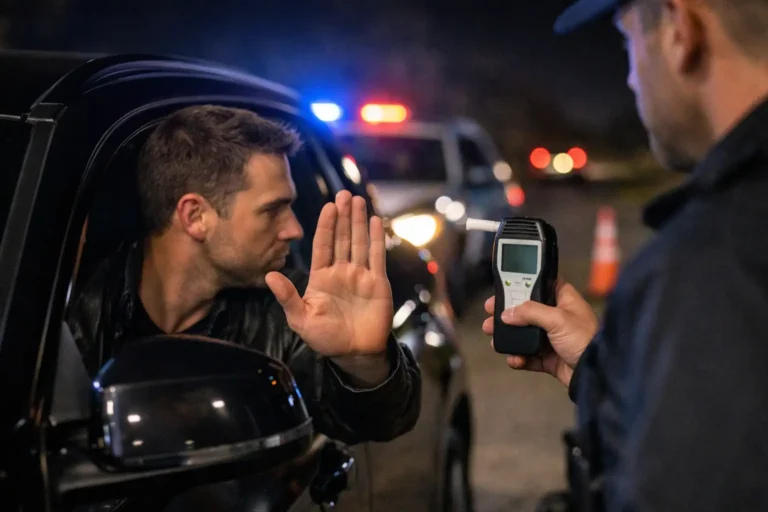
A traffic stop may have begun with an alleged lane violation, speeding, or equipment issue. Then the case expands after a vehicle search, a dog alert, a statement from a passenger, or the discovery of drugs in a shared space. Each step has to be examined carefully. If the stop was not lawful, if the detention was extended improperly, or if the search exceeded what the law allows, key evidence may be challenged.
Constructive possession is another major issue. If drugs were found in a car with multiple occupants, in a house shared by several people, or in a bag that more than one person could access, the State still has to connect the drugs to a specific defendant. Being near drugs is not always the same as knowingly possessing them.
Statements matter too. People under pressure often try to explain, minimize, or distance themselves from what officers found. Those statements can become central evidence. Whether Miranda warnings were required, whether questioning became custodial, and whether a statement was voluntary are all issues worth reviewing early.
What Makes Trafficking Cases Different From Lower-Level Drug Charges
The biggest difference is the level of risk. A misdemeanor or lower-level felony drug case may still be serious, but trafficking charges put prison exposure front and center from day one. They also change the stakes in bond arguments, plea negotiations, and trial preparation.
They can also trigger collateral problems that reach beyond the courtroom. A conviction may affect professional licenses, firearm rights, immigration status, college opportunities, housing, and family-court issues. For many clients, the threat is not only incarceration. It is the long tail of consequences that can follow a felony drug conviction for years.
That is one reason early legal strategy matters so much. Waiting to see what happens can cost leverage. By the time formal discovery is underway, the State may already have framed the case around assumptions that should have been challenged at the beginning.
What To Do After a Trafficking Arrest
The first move is simple but critical: do not try to explain the case to law enforcement, cellmates, friends, or on social media. People often believe they can talk their way out of a misunderstanding. In reality, they usually give the prosecution more material to work with.
The second move is to get a defense lawyer involved as early as possible. Early intervention can matter in bond hearings, evidence preservation, witness contact, and strategic communication with the prosecution. In a serious drug case, the first phase is not just administrative. It can shape the path of the case.
If your case involves a vehicle search, preserve anything that may help reconstruct the stop. That may include tow paperwork, impound information, passenger identities, timeline details, and any video that may exist. If the allegation involves a home or residence, the warrant, affidavit, and manner of execution deserve close review.
Common Defense Issues in Drug Trafficking Cases
No honest lawyer should treat every trafficking case as if it turns on one argument. It depends on the facts. Still, several issues appear again and again.
One is whether the search was lawful. Another is whether the State can actually prove knowing possession. A third is whether the lab result and weight support the charged trafficking tier. Chain of custody can matter, especially when multiple packages, multiple substances, or delayed testing are involved. In some cases, law enforcement credibility becomes a real issue, particularly where the stop, consent, or alleged admissions are disputed.
There are also trade-offs in how a case is defended. Sometimes the strongest approach is a suppression challenge aimed at critical evidence. Sometimes the focus is factual, showing the drugs were not your client’s or that the State cannot prove the necessary weight. Sometimes the case calls for negotiation built on weaknesses in proof rather than a trial-first posture. Good defense strategy is not about using the same script every time. It is about identifying where the State is vulnerable and moving with discipline.
Why Local Courtroom Experience Still Matters
Drug laws are statewide, but criminal cases are still handled by local courts, local prosecutors, and local judges. Procedure, scheduling, negotiation posture, and bond practice can vary in meaningful ways from one county to another. A lawyer who regularly handles criminal cases in South Carolina is better positioned to spot issues early and prepare for how the case is likely to move.
That is especially true in higher-stakes felony cases, where practical judgment matters as much as legal research. Former prosecutor insight can help because it sharpens the defense view of how the State evaluates proof, pressure points, and sentencing risk.
The Question Most People Ask First
People usually want one immediate answer: Am I going to prison?
The only honest response is that trafficking charges carry real prison exposure, but no serious lawyer should answer that question based only on the arrest warrant. The evidence has to be tested first. Was the search valid? Was the weight confirmed? Can the State prove possession? Is there a co-defendant pointing blame? Are there suppression issues? Is the alleged quantity enough for the charged tier? Those questions matter more than the wording used at booking.
If you are facing a trafficking charge in South Carolina, the goal is not to panic and it is not to guess. It is to get control of the facts quickly, protect your rights early, and build a defense around what the State can actually prove – not what the arrest paperwork claims.
This article provides general information about South Carolina drug trafficking charges. It is not legal advice for your specific case. The penalties and defense options depend on the substance, alleged weight, lab testing, search facts, statements, prior record, court, and exact charge filed.