
How to Protect Your License After Arrest
The clock on your driver’s license can start running before your criminal case is anywhere close to finished. If you need to protect your license after arrest, the most important thing to understand is this: the threat to your driving privileges may come from a separate process with its own deadlines, paperwork, and consequences.
For many people in South Carolina, that is the first real shock. They expect the court date to be the whole case. It usually is not. A DUI arrest, certain traffic-related charges, or an allegation tied to drugs or refusal issues can trigger license problems almost immediately. If you drive to work, take your kids to school, or need a vehicle to keep your household running, early action matters.
Why license problems move faster than your case
A criminal charge and a license suspension often travel on parallel tracks. One happens in court. The other may be handled through an administrative process. Those tracks can affect each other, but they are not the same thing.
That distinction matters because people often make a costly mistake. They focus only on the criminal accusation and assume the license issue will sort itself out later. By the time they realize a hearing deadline passed or a suspension has already taken effect, their options may be narrower.
This is especially common after a DUI arrest. A person may be released from jail, get a court date, and think the next step is simply to show up. In reality, there may be a short window to request a hearing, challenge a suspension, or take steps that preserve some ability to drive while the case is pending.
Protect your license after arrest by acting early
The first priority is getting clear on exactly what happened at the time of the stop and arrest. Was there a DUI allegation? Was there an accusation of refusing a breath test? Was there a notice of suspension issued on the spot? Was the arrest connected to drugs, an accident, or a prior record that changes the stakes?
Small details can change the legal path in a big way. Two people can both say, “I got arrested and now I might lose my license,” while facing very different risks. One may be dealing with a temporary suspension and a right to challenge it. Another may be facing a longer-term problem tied to prior history or a separate charge.
That is why speed matters, but so does accuracy. A rushed guess is not a strategy. A clear review of the paperwork, the arrest facts, and the immediate deadlines is.
What to do in the first 48 hours
Start by gathering every document you received. That includes tickets, bond paperwork, a notice of suspension, any temporary alcohol license paperwork, and any instructions given by the officer or jail staff. Do not assume one page is unimportant. Sometimes the key deadline is sitting in a form people barely read.
Next, write down what happened while it is still fresh. Include where you were stopped, what the officer said, whether field sobriety tests were requested, whether a breath test was offered, and what happened after arrest. If your vehicle was towed, note that too. Facts that seem minor that night can matter later when a lawyer evaluates whether the stop, arrest, or suspension process can be challenged.
Then look at your practical risks. Do you need to drive for work? Are you subject to bond terms that limit travel or alcohol use? Do you hold a job where a suspended license creates immediate employment trouble? Those issues may not change the law, but they do affect strategy. Good defense planning protects your life, not just your court file.
Common mistakes that make license problems worse
One mistake is driving as if nothing happened. If your license has been suspended or your driving privilege has changed, getting behind the wheel without legal authority can create a new problem on top of the original arrest.
Another is missing the administrative side of the case. People often understand that a criminal court date matters. They do not always understand that a separate request may be needed to contest a suspension or seek a restricted form of driving privilege.
A third mistake is waiting to “see what the judge says” before getting legal advice. By then, some deadlines may be gone. In license cases, delay can quietly do damage.
There is also the issue of statements. After an arrest, people sometimes call agencies, explain their side, or try to straighten things out themselves. That can feel responsible, but it can also create admissions, confusion, or inconsistent records. You should understand the process before trying to fix it on your own.
DUI arrests and the highest-risk license issues
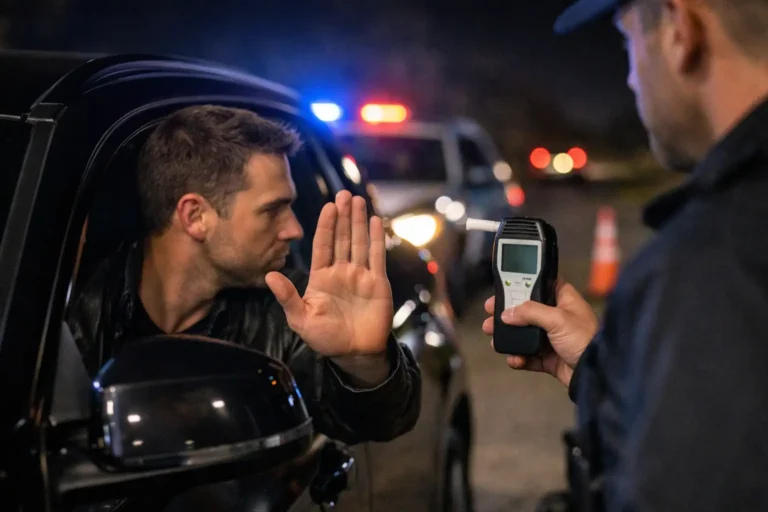
If the arrest involves DUI, the pressure on your license is usually immediate. South Carolina DUI-related suspensions can be triggered by breath test results, refusal allegations, and prior history. The exact consequences depend on the facts, and that is where people get into trouble with broad internet advice. General information is not the same as advice tailored to your paperwork.
For some drivers, the urgent issue is preserving the chance to challenge the suspension. For others, it is securing lawful driving options while the case is pending. For still others, the key question is whether the officer had the legal basis for the stop, the arrest, or the testing procedure in the first place.
Those are not technical side issues. They can shape both the license case and the criminal defense strategy. A well-prepared response looks at the full picture from day one.
When a restricted license may or may not help
Many people ask the same question right away: Can I still drive to work? Sometimes the answer may be yes through a limited or temporary process, but it depends on the charge, the basis for suspension, prior history, and whether the right steps are taken quickly.
That is where false confidence is dangerous. A person hears from a friend that “you can always get a work license,” relies on that assumption, and later learns the rules are narrower than expected. Another person assumes there is no option at all and gives up a lawful opportunity that could have protected income and stability.
The right answer is specific to your case. It depends on timing, eligibility, and the documents generated at arrest.
How a defense lawyer helps protect your license after arrest
A strong defense response does more than appear in court. It identifies the deadlines that matter now, evaluates whether the suspension can be challenged, and works to reduce avoidable damage while the case develops.
That includes reviewing the stop, the officer’s reports, testing records, video if available, and the exact administrative notices issued. It also includes helping you avoid secondary mistakes, such as unlawful driving, missed filings, or statements that complicate the defense.
In many cases, early intervention changes the trajectory. Not because there is a magic form or a scripted outcome, but because timing matters. A missed deadline cannot always be repaired. A record that is not challenged early may become harder to unwind later.
For people in York County and surrounding South Carolina communities, the practical side matters just as much. You may need to keep a job, protect a professional reputation, meet family obligations, and avoid creating new legal exposure while the case is pending. That is why defense strategy should be built around both the courtroom and the real-world consequences of a suspension.
Questions to ask right away
When you speak with a lawyer, focus on the issues that affect your next week, not just your eventual court date. Ask whether your license is already suspended, whether a hearing deadline applies, whether any temporary or restricted option exists, and what you should not do while the case is pending.
You should also ask how the license issue interacts with the criminal charge. Sometimes those paths overlap in ways that help the defense. Sometimes they create separate risks that need separate attention. Either way, clarity early on gives you better control.
The right mindset in the first days after arrest
Treat a threatened license like an urgent legal issue, not a paperwork problem. If your ability to drive supports your work, your family, and your routine, then protecting that privilege deserves immediate attention.
Calm action is better than panic. Read the documents carefully. Do not make assumptions based on somebody else’s case. Get a clear assessment of your deadlines and options. Carolina Criminal Defense approaches these cases the way they should be handled – with speed, preparation, and a strategy built to protect your future as well as your record.
A license suspension can start disrupting your life long before your case reaches a final result, which is exactly why the first smart move is often the most important one.