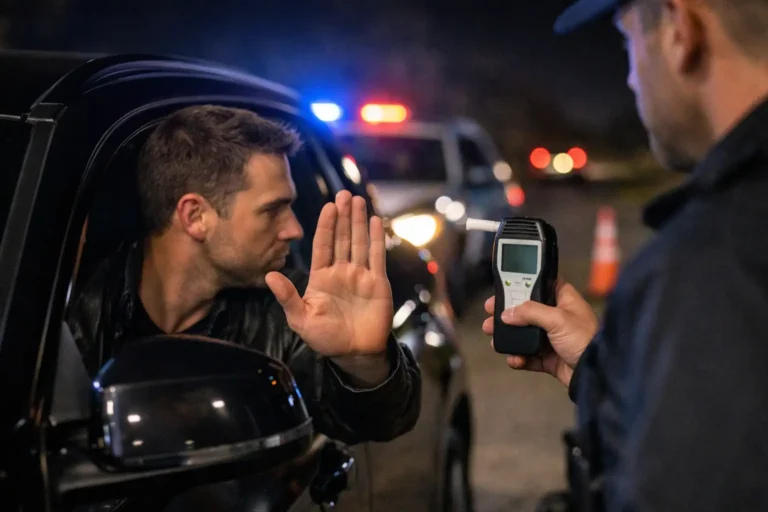

How to Respond to Police Questioning
A police officer asks if you can “just answer a few questions,” and suddenly a normal day turns into a high-pressure moment. If you are wondering how to respond to police questioning, the goal is not to outtalk the officer or explain everything perfectly. The goal is to protect yourself, stay calm, and avoid making a bad situation harder to fix.
Many people talk because they think silence will make them look guilty. Others believe that if they cooperate fully, the officer will see they are innocent and move on. Sometimes that happens. Often, it does not. Police questioning is not a casual conversation. It is part of an investigation, and what you say can be misunderstood, taken out of context, or used later in court.
How to respond to police questioning in the moment
Start with control. Keep your voice calm, keep your hands visible, and do not argue or make sudden movements. Whether you are stopped on the roadside, approached at home, or contacted by phone, your first job is to avoid escalating the encounter.
You generally do not help yourself by filling silence with explanations. People under stress guess at timelines, mix up details, or say things they later need to correct. Those corrections can be framed as lies. A simple statement is usually stronger than a long one: you want to remain silent, and you want a lawyer.
That does not mean you should be disrespectful. It means you should be clear. You can say, “I want to remain silent,” and “I want to speak with a lawyer before answering questions.” Then stop talking about the facts of the situation.
If an officer asks for basic identifying information, comply as required. But there is a difference between identifying yourself and answering investigative questions. “Where were you coming from?” “How much did you have to drink?” “Whose drugs are these?” “Did you two get into an argument?” Those are the kinds of questions that create evidence.
The mistake people make when they think they can explain it away
A common reaction is to believe there has been a misunderstanding that can be cleared up right there. That instinct is human, especially for first-time defendants, professionals worried about work, or parents focused on getting home. But police questioning is designed to gather facts, test your story, and lock you into statements.
Even truthful answers can hurt you. Maybe you admit you had one drink because you want to seem honest. Maybe you explain that the argument “got loud” but insist nobody was hurt. Maybe you say the pills were not yours, but then try to explain why they were in your car. Each answer may seem harmless on its own. Together, they can give the state a roadmap.
This is especially true in DUI, domestic violence, drug, theft, and assault investigations. Officers are trained to notice inconsistencies, admissions, body language, and timing. They do not need a full confession to build a case. Sometimes they only need enough from your own mouth to justify an arrest or support a charge already under consideration.
What to say and what not to say
Short, respectful language works best. You do not need a speech. You do not need to sound like a lawyer. In fact, trying too hard usually makes things worse.
Good responses are direct: “I am not answering questions.” “I want a lawyer.” “I do not consent to any searches.” If the officer keeps talking, you do not need to debate. Repeat yourself if necessary.
What should you avoid? Do not lie. Do not give partial explanations. Do not guess. Do not joke. Do not try to talk your way out of handcuffs. Do not consent to a search just because the request sounds routine. And do not assume a friendly tone means the conversation is off the record.
There is also a difference between staying silent and becoming confrontational. Refusing to answer questions is a legal choice. Insulting the officer, resisting physically, or interfering with the stop creates new problems that a defense lawyer may then have to manage alongside the original allegation.
If police question you at your home or by phone
Not every investigation starts with flashing lights. Sometimes an officer knocks on your door and says they just want your side of the story. Sometimes a detective leaves a voicemail asking you to come in and clear something up. Those situations can feel less threatening, which makes them dangerous in a different way.
If police come to your home, step outside if appropriate and keep the interaction controlled. Do not invite officers inside unless they have a warrant or there is some other legal basis requiring entry. Ask if you are being detained. If not, tell them you do not want to answer questions without a lawyer.
If police call you, you are usually better off saying very little. You can be polite and firm: “I am not discussing anything without legal counsel.” Then end the call. Voluntarily going to the station to talk rarely helps without a defense strategy in place first.
What changes in a traffic stop or DUI investigation
Roadside questioning has its own pressure. Drivers often feel they have to answer every question because they are already stopped. In South Carolina, as elsewhere, a traffic stop can quickly expand from a simple violation into a DUI or drug investigation based on what the officer sees, smells, or hears.
You should provide the documents required for the stop and follow lawful instructions. But when the officer starts asking where you were, whether you drank, or when you last used anything, that is no longer small talk. That is evidence gathering.
The hard part is that DUI cases involve specific legal issues, including implied consent and chemical testing, that can carry separate consequences. This is one reason broad internet advice has limits. The smartest move is usually to say as little as possible during the stop and get case-specific legal advice as soon as you can after the arrest or investigation.
Why asking for a lawyer matters early
People often think hiring a lawyer is only for court. In reality, one of the most important moments for a defense lawyer is before more statements are made. Early intervention can shape how the case develops, what information is shared, and whether you avoid preventable mistakes.
A lawyer can also tell you what not to do after the encounter. That matters because many cases get stronger for the prosecution after the police contact is over. People text witnesses, post online, call the alleged victim, or repeat their version of events to friends and family. Those messages and statements can come back later.
If you have already answered questions, do not assume the damage is done and nothing can be fixed. Stop talking about the case, preserve any paperwork or recordings, and get legal advice quickly. Timing matters.
How to respond to police questioning if you are innocent
This is where people are most vulnerable. Innocent people often talk more because they believe the truth will protect them. But innocence is not a strategy by itself. Investigations are built on statements, impressions, and evidence collection, and innocent people can still make damaging admissions.
Maybe you were present but did nothing wrong. Maybe the property was not yours. Maybe the other person started the fight. Maybe you truly only had one drink. A defense lawyer wants to evaluate those facts carefully, not have them rushed out under pressure in a parking lot, living room, or interview room.
Your right to remain silent is not reserved for guilty people. It is a protection for anyone facing the power of a criminal investigation.
What happens after you stay silent
Many people worry that asking for a lawyer will make them look guilty or guarantee arrest. Sometimes the officer was going to arrest you anyway. Sometimes the officer was trying to strengthen a weak case with your help. Staying silent does not create the evidence. It simply denies the state free evidence from your own mouth.
And if charges do follow, your defense starts from a better position when your statements are limited. Your lawyer can assess the stop, the witness claims, the search, the testing, the reports, and the timeline without also having to explain away avoidable admissions.
At Carolina Criminal Defense, that early stage matters because cases are often won or lost by what happens before the first court date. Calm decisions in the first hour can protect your options for the months that follow.
If police want to question you, treat that moment seriously. Be respectful. Say less. Ask for a lawyer before you try to explain your way through it.