Probable Cause Traffic Stop SC and Your Rights
A blue light in the rearview mirror can turn an ordinary drive home into a moment that affects your license, job, and family. If you are searching for answers about a probable cause traffic stop SC, one point matters immediately: police do not always need probable cause to pull a vehicle over. But they do need a lawful basis, and that basis can become a central issue in a DUI, drug, weapons, or traffic case.
The details matter. What the officer says happened, what appears on dash or body camera footage, how long you were detained, and what occurred after the stop can all shape the defense strategy. A traffic stop is not a blank check for law enforcement to search, question, or detain someone without limits.
Probable Cause Traffic Stop SC: The Legal Starting Point
Under the Fourth Amendment and the South Carolina Constitution, people have protection from unreasonable searches and seizures. A traffic stop counts as a seizure, even when it begins with a minor allegation such as speeding, a broken taillight, failure to maintain lane, or an expired tag.
For an initial traffic stop, an officer generally needs reasonable suspicion, not probable cause. Reasonable suspicion means the officer must be able to point to specific facts suggesting a traffic violation or criminal activity may have occurred. It is a lower standard than probable cause, but it cannot be a mere hunch.
Probable cause is a stronger standard. It generally means the known facts would lead a reasonable person to believe an offense has been committed. An officer may have probable cause to issue a citation or make an arrest after observing a violation, smelling an odor associated with alcohol or marijuana, seeing contraband in plain view, or gathering other legally reliable evidence during the encounter.
That distinction is not just technical. A stop that began lawfully can still become unlawful if the officer extends it without a valid reason. Likewise, an officer may describe an observation in a report, but video footage, dispatch records, witness statements, or the officer’s own testimony may not support that account.
What Can Justify a South Carolina Traffic Stop?
A valid stop can arise from an observed traffic offense, even a minor one. Examples may include speeding, weaving, improper lane use, running a stop sign, driving without headlights when required, or equipment issues. Officers can also stop a vehicle based on reasonable suspicion that the driver is impaired, the vehicle is connected to a reported crime, or the driver is committing another offense.
The real question is not whether the allegation sounds serious. The question is whether the officer had enough specific, objective information at the time the blue lights came on.
For example, an officer’s claim that a vehicle crossed a lane marker may support a stop in some circumstances. But the defense may examine whether the road was narrow, weather conditions were poor, the movement was brief, the vehicle actually left its lane, or video contradicts the report. A vague statement that a driver was acting suspiciously may not be enough on its own.
Anonymous tips create another issue. A tip may help justify a stop if it contains enough reliable details and police corroborate meaningful information. A bare claim that a person is driving drunk, without reliable indicators or police observation, may raise difficult constitutional questions.
A Lawful Stop Does Not Permit Everything That Follows
Once stopped, a driver is generally expected to provide required identifying and vehicle documents. The officer may ask questions related to the reason for the stop and take reasonable steps to address it, such as checking a license, registration, insurance information, and outstanding warrants.
The detention must remain reasonably tied to the traffic mission. Police cannot simply hold someone longer to look for unrelated criminal activity unless they develop new reasonable suspicion or another legal basis arises.
This issue often matters in DUI and drug cases. An officer may stop a car for speeding, then claim to notice alcohol on the driver’s breath, slurred speech, an admission to drinking, or signs of impairment. Those observations may give the officer grounds to investigate further. But a careful defense review asks whether those signs were genuinely present, whether they were documented consistently, and whether innocent explanations were ignored.
Fatigue, anxiety, allergies, a medical condition, poor lighting, nervousness during a police encounter, and uneven road conditions can all affect how a person looks or performs. They do not automatically defeat the state’s case, but they may be important when evaluating whether the detention and arrest were justified.
Searches of Your Vehicle Require Their Own Legal Basis
An officer does not gain automatic authority to search your car simply because you were stopped. A vehicle search generally requires a recognized legal basis, such as consent, probable cause, a valid search warrant, or certain circumstances connected to a lawful arrest.
Consent is one of the most common issues. If a driver voluntarily agrees to a search, police may not need a warrant or probable cause. Whether consent was truly voluntary can depend on the wording of the request, the setting, the number of officers present, and what the driver understood at the time.
Probable cause can also permit a vehicle search under the automobile exception. If an officer has probable cause to believe the vehicle contains evidence of a crime or contraband, the search may extend to areas where the item could reasonably be located. The scope of that search depends on what police reasonably believe they are looking for.
A search incident to arrest has narrower rules than many people assume. Arresting a driver does not automatically authorize a full search of every part of the vehicle. The legality depends on the circumstances of the arrest and whether officers had a valid reason to believe the vehicle contained evidence relevant to that offense.
DUI Stops Often Turn on the First Few Minutes
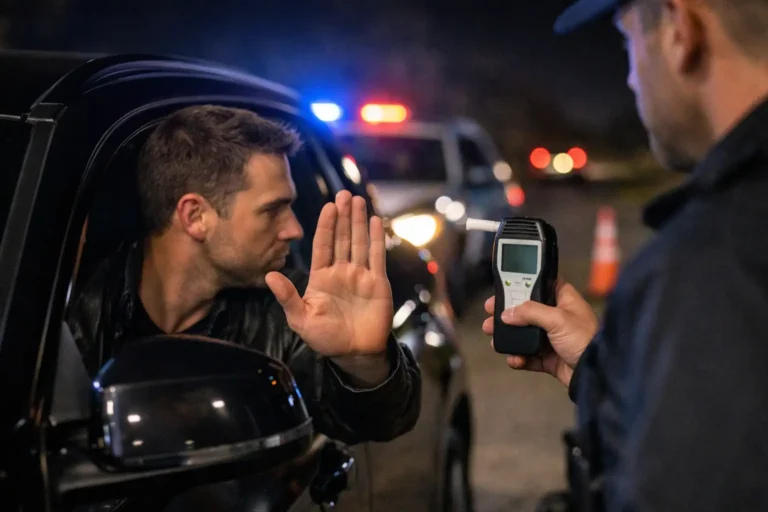
In a South Carolina DUI case, the traffic stop is often the first pressure point for the prosecution and the defense. Officers may rely on driving behavior, statements, physical observations, field sobriety exercises, a roadside breath test, and later chemical testing. Each stage should be examined separately.
A driver may be nervous, confused, or unaware of why the stop occurred. That is why it is usually wise to remain calm, avoid arguing on the roadside, provide required documentation, and avoid making unnecessary admissions. Do not physically resist or interfere with an officer. If you are arrested, ask to speak with a lawyer as soon as you are able.
The officer’s conclusion is not the final word. Field sobriety exercises can be affected by footwear, injuries, age, fatigue, road surface, lighting, and the instructions given. Video may show a different picture than the written report. In some cases, the most important evidence is not what the officer found, but what the officer failed to investigate or preserve.
How a Defense Lawyer Tests the Stop
A serious defense review starts early, before memories fade and video is lost. The goal is to identify the legal basis for every stage of the encounter: the initial stop, the questioning, the continued detention, any search, field tests, arrest, and chemical test procedures.
That review may include the officer’s reports, body camera footage, dash camera footage, dispatch and 911 recordings, warrant information, calibration and maintenance records, photographs, medical evidence, and witness accounts. It may also involve comparing timestamps. A report may say an officer developed suspicion quickly, while the video shows a lengthy detention before any alleged sign of criminal activity appears.
If police lacked reasonable suspicion for the stop, or if they unlawfully extended the detention or conducted an improper search, a lawyer may seek to suppress evidence obtained as a result. Suppression is not automatic, and the facts control. Still, constitutional issues can change the state’s evidence, negotiating position, and the path forward in court.
Do Not Wait to Preserve the Facts
After a traffic stop, write down what you remember while it is fresh: where you were stopped, what the officer said was wrong, what questions were asked, whether you were asked for consent to search, and whether cameras were visible. Save paperwork, tow records, and any messages or notes that help establish your timeline.
Do not post about the incident on social media or try to contact witnesses in a way that could create problems. A charge or citation may feel manageable at first, but license consequences, court dates, bond conditions, and employment concerns can move quickly.
A traffic stop may have started with a minor allegation, but the constitutional questions behind it are rarely minor. Getting clear legal advice early gives you the best opportunity to preserve the facts, understand the risks, and make informed decisions about what comes next.